
The handle is the only part of a roof window most people ever touch, and it does more than open the sash. On a modern unit the bar carries the latch, the ventilation position, and on many designs the cleaning lock as well, all in one piece of extruded aluminium about 600mm long. Where children use the room, that bar is also the thing standing between a curious six-year-old and an opening in a roof several metres above a garden. This page covers what the hardware actually does, where the control sits and why, what a child restrictor is and is not, and how restriction has to be reconciled with escape.
Why the control sits where it does
Two arrangements dominate. A top control bar runs across the head of the sash and is pulled towards you to release. A bottom handle sits at the cill and is turned or lifted. Neither is a preference: each belongs with a particular way of using the room.
A top bar keeps the control away from small children, keeps furniture clear of it, and is the natural position where a window sits high on a slope and is operated by somebody standing under it. It is also the arrangement that allows a window to be opened without leaning across the aperture, which on an upper floor is worth having.
A bottom handle suits a low window somebody stands at, particularly where the head is out of comfortable reach. It brings the control to about 1,000mm above the floor, which is easy for an adult and, unhelpfully, also easy for a child. That is the trade-off the safety hardware exists to manage.
What the latch inside the bar is doing
Pulling the bar releases a pair of latch bolts, one at each side of the sash, that engage into keeps on the frame. Those bolts are what hold the sash shut against wind and what pull the seal into compression. They are not a lock in the security sense, and nobody should describe them as one.
Compression is the part people underestimate. A sash that is not pulled properly into its seal will pass air and, in driving rain on an exposed slope, will pass water at the head. If a window feels loose when closed, the latch keeps are usually out of adjustment rather than the seal being worn.
The keeps are adjustable on most ranges, generally by a screw with a slotted plate behind it, and correcting them takes minutes. It is one of the few genuine adjustments on a roof window and it is the first thing to check when a closed sash rattles.
The ventilation detent, and the position between shut and open
Most control bars have an intermediate position. Pull the bar out one stage and the latch stays engaged while a flap along the head lifts, opening a filtered slot. The sash is still held shut and the window still reads as closed from outside.
This is the position that should be in use for most of the year in a habitable room, and it is the one nobody is ever shown. It provides background ventilation without an open sash, which matters in a bedroom and matters more in a house that is empty during the day.
The full detail on the slot, the filter behind it and how much air it moves is on our page about ventilation flaps and filters. For the purposes of the handle, the thing to know is that the detent exists and that it is not the same as an open window.
What a child restrictor catch actually is
A child restrictor is a mechanical stop, fitted to the frame or the hinge side, that limits how far the sash can travel. The typical arrangement allows around 100mm to 150mm of opening before the stop engages, which is enough for airflow and not enough for a child to pass through.
Most restrictors are releasable by an adult, either by pressing a button, sliding a catch or lifting a lever, so the window can still be opened fully when needed. Some are key-operated and hold the restriction until the key is used.
The difference between the two types is the whole safety argument. A releasable restrictor is a reminder and a barrier to a small child. A key-operated one is a lock, and locking a window in a bedroom raises a set of questions about escape that have to be answered before it goes on.
Restrictors on centre-pivot units
A centre-pivot sash rotates about a horizontal axis across its middle, so the top half swings out while the bottom half swings into the room. The gap a child could reach is at the top, above the pivot bar, and the bar itself sits across the aperture at roughly waist height on the window.
That geometry is helpful. The pivot bar physically divides the opening in two, and a restrictor limiting rotation to a modest angle leaves two narrow gaps rather than one large one. It is a more forgiving arrangement for a child’s room than a fully clear aperture.
The counterpart is that the lower half swings inward, and a child standing directly under a rotating sash can be caught by it. Where a centre-pivot unit is low enough to be reached, that is worth thinking about alongside the opening size.
Restrictors on top-hung units
A top-hung sash is hinged at its head and swings outward like a hatch, leaving the whole aperture clear. Nothing crosses the opening, which is exactly what makes the format good for escape and exactly what makes it the one that needs restricting in a child’s room.
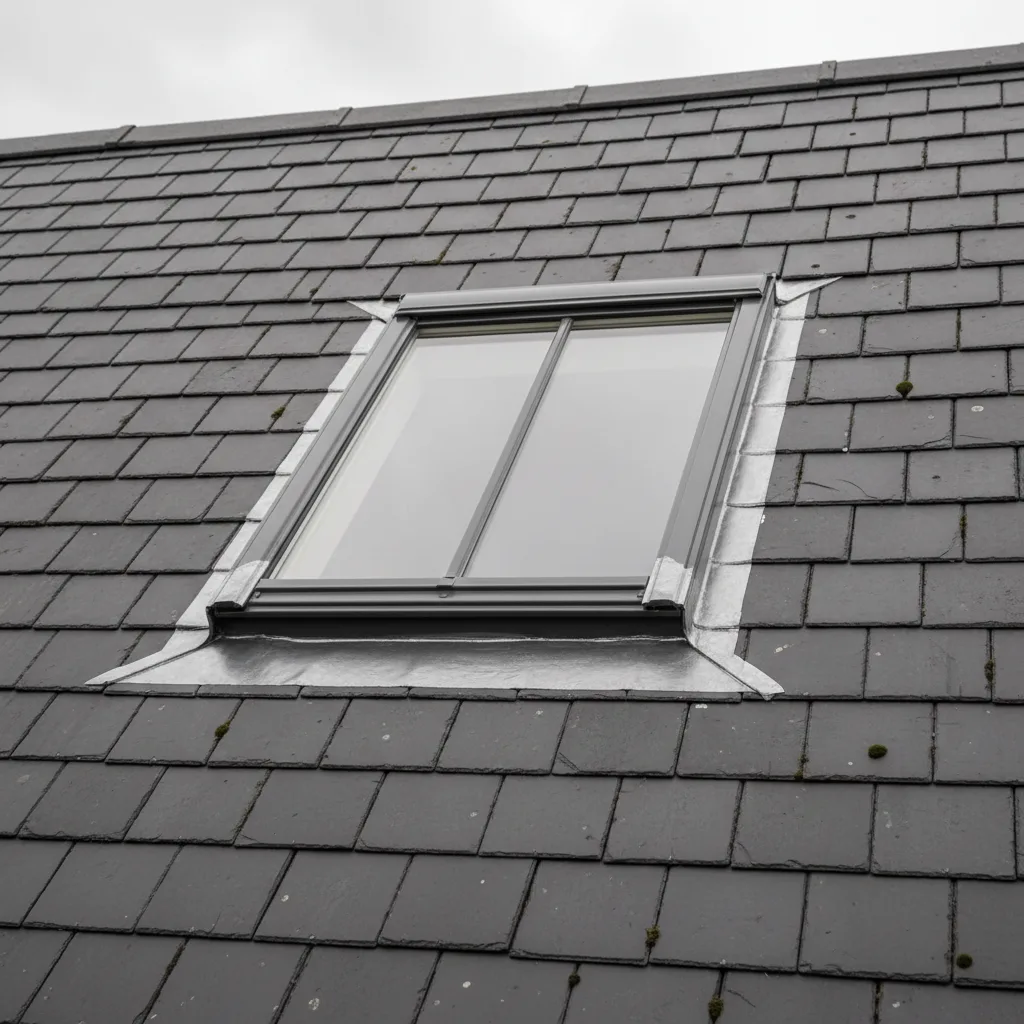
Top-hung units use a friction stay or a strut along one or both sides, and the restrictor generally works by limiting travel on that stay. Set correctly it holds the sash at a fixed small angle and takes wind load without slamming.
The comparison between the two formats in general terms is on our page comparing centre-pivot and top-hung units. For safety, the relevant point is simply that a clear aperture needs more deliberate restriction than a divided one.
Where guarding law actually applies
Approved Document K covers protection from falling, and it comes into play where an opening in a habitable room sits low relative to the floor with a drop outside it. Approved Document N deals with safe opening and cleaning of windows. Neither document mandates a child restrictor on a domestic roof window as a blanket rule.
What Building Control assesses on a loft conversion is whether the aperture, at its cill height and pitch, presents a fall risk. Where it does, the answer is guarding, restriction, or a different cill height, and which of those is acceptable is a judgement made on the specific room.
The honest position is that a restrictor is often a sensible household measure rather than a legal requirement, and it is worth fitting on that basis rather than waiting to be told to. Where a room is genuinely marginal on guarding, that needs settling at design stage, not on the day.
Restriction against escape, and how the two conflict
Here is the tension. A roof window serving as the escape opening for a loft bedroom has to give a clear openable area with nothing obstructing it, and it has to be operable by somebody in that room without a key. A key-operated restrictor on that window defeats the purpose it was installed for.
The resolution is a restrictor that releases without a key, by a mechanism an adult can operate immediately and a young child cannot. Those exist across the main ranges and they are what should be specified on an escape window.
Where a window is not the escape route, and a room has another compliant means of escape, a key restrictor is defensible. Establish which situation applies before ordering the hardware. The requirements are set out on our page about escape openings and the rules.
| Situation | Appropriate restriction |
|---|---|
| Child’s bedroom, window is the escape route | Tool-free releasable restrictor only |
| Child’s bedroom, escape provided elsewhere | Releasable or key restrictor, household decides |
| Landing or stair, no escape duty | Restrictor sensible where reachable |
| Window out of reach from any floor surface | Restriction usually unnecessary |
Furniture, and the climbing route nobody planned
A restrictor deals with the window. It does not deal with the thing that gets a child to the window, and on a loft that is usually a bed, a chest of drawers or a low bookcase pushed against the slope.
A cill at 1,100mm is out of reach for a five-year-old standing on the floor and entirely within reach for the same child standing on a bed. Where the bed is under the window, the effective cill height is the mattress height plus a child’s reach, which changes the assessment completely.
The practical answer is to keep climbable furniture away from the window, or to accept that it will be there and specify accordingly. It is a layout question as much as a hardware question, and it belongs in the same conversation as the cill height decision.
Reach, and controls that are too high to use
A control above about 1,900mm from the floor is not comfortably operable by most adults, and above 2,000mm it is not operable at all without something to reach with. High windows are common over stairs and in tall loft spaces.
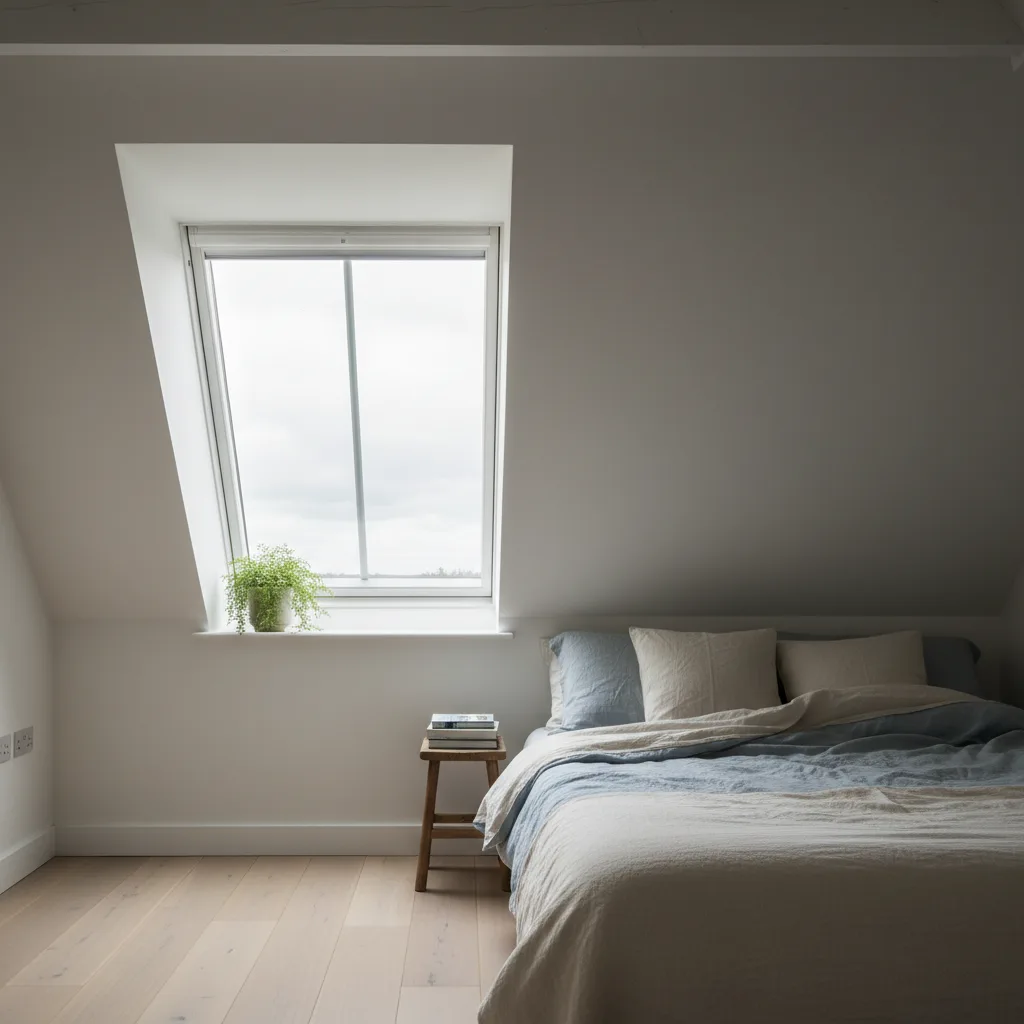
The standard answer is a telescopic pole with a hook that engages the bar, typically extending to around 3m. It works, but it lives somewhere in the room and it takes a certain knack. In a child’s room a pole is also, inconveniently, a way for a child to reach a control that was safely out of reach.
Control rods with a fixed handle at a chosen height are a tidier answer where the window is used daily. They put the operating point where you want it, which can be deliberately high in a child’s room.
Electric operation as a safety answer
An electric roof window removes the manual control from the room entirely. The sash is operated by a wall switch, a remote or a wired keypad, and the switch can be sited out of a child’s reach or locked out on some systems.
That is a genuinely good answer in a high or awkward position, and it also removes the pole. The chain drive on a powered unit holds the sash at whatever position it stops in, so partial opening is exact rather than approximate.
Two conditions. A rain sensor is essential if the window will ever be left open unattended, and the cable has to be planned before the ceiling is boarded. Retrofitting a supply into a finished sloping ceiling is disruptive work, and solar-powered versions exist largely to avoid it.
The rotation lock and the cleaning position
Centre-pivot units have a catch that holds the sash rotated at around 160 degrees so the outer glass faces into the room and can be cleaned from inside. On most designs it is a small slide or button on the side jamb that engages once the sash is turned past a certain point.
It matters for safety because a sash left in the cleaning position is not latched, and a child who reaches an unlocked rotated sash is in a different situation from one at a restricted window. Return the sash and latch it after cleaning, every time.
The method itself, including what to use and what not to use, is covered on our page about cleaning the outside of a roof window.
What goes wrong with handles over time
Three things account for most hardware complaints. The latch bolts fall out of adjustment and the sash rattles or feels loose. The friction stay on a top-hung unit loses tension and the sash creeps closed. The plastic end caps on an aluminium bar crack, usually where the bar has been used to pull the sash shut by force.
None of these are structural and all of them are adjustments or component swaps. Latch keeps adjust with a screwdriver. Friction stays have a tension screw. End caps and bars are stock items for current models.
Where the sash itself has dropped and no longer meets the keeps squarely, the hinges have worn, and that is a bigger conversation. On a unit past about twenty years, replacing the window is often the better route than sourcing parts for a range that has ended.
Fitting new hardware to an older window
Handles, bars and restrictors are model-specific. You need the type plate, which sits on the top rail of the sash and is readable once the window is rotated, and it carries a product code and a manufacturing date. Ordering from a photograph of the handle rarely ends well.
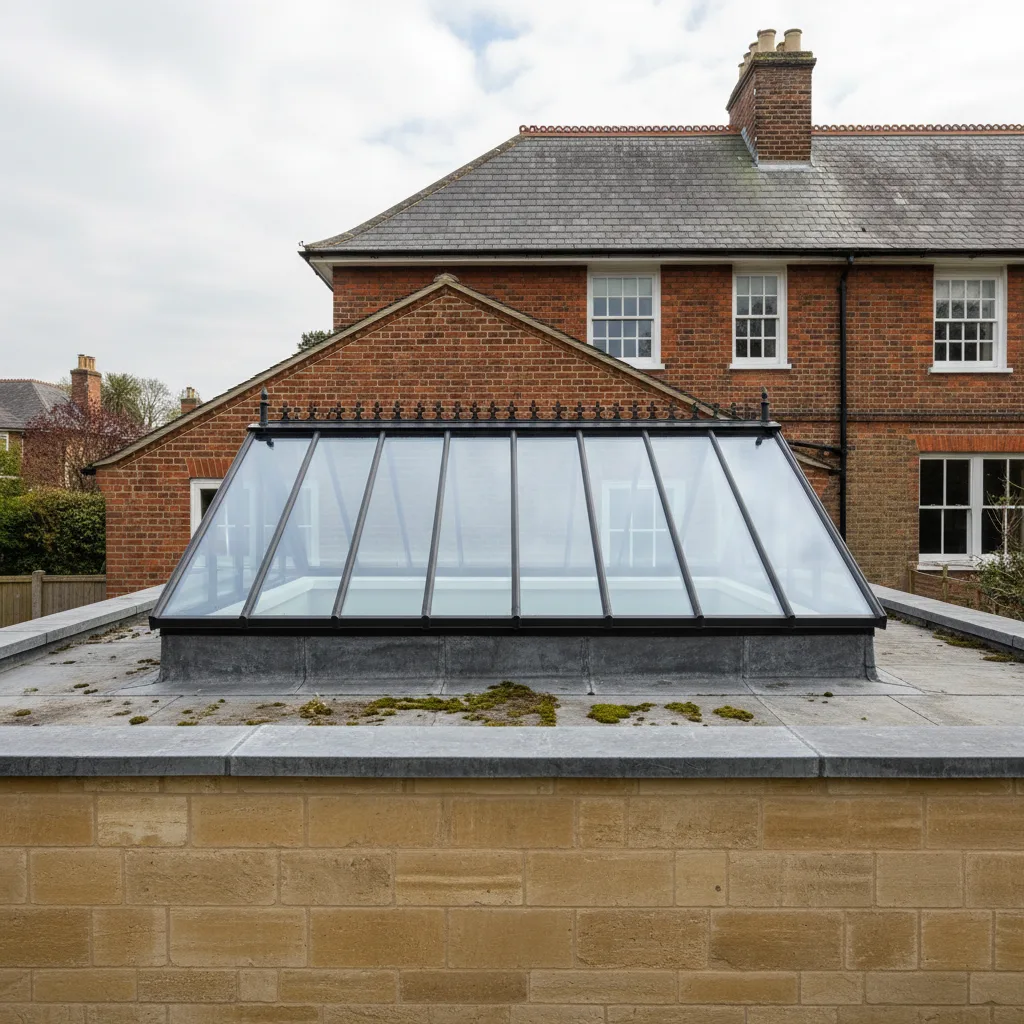
For current ranges the parts are available and inexpensive. For windows made before about 2000 the parts are frequently no longer produced, and generic restrictors that screw to the frame are the practical alternative. They work, though they are visible and they need fixing into sound timber.
Where a household is weighing new hardware on an old window against a new unit, the honest calculation includes the glazing, the seals and the flashing at the same time. Our page on replacing an old roof window sets out where that line usually falls.
Security, and what a roof window latch is worth
A roof window on an upper storey is a low-priority target because reaching it means getting onto a roof in view of a street. That is most of the security answer, and it is why roof window hardware is not built like a ground-floor door.
Where a roof window is genuinely accessible, over a flat roof extension, above a garage, or on a single-storey rear, it deserves better than the standard latch. Laminated glazing on the outer pane is the most useful upgrade, because it resists being broken through rather than merely being locked.
Some ranges offer a security kit with additional locking points. It is worth specifying on an accessible unit and unnecessary on a second-floor slope.
What we check and hand over
On every unit we fit, the latch engagement is set so the sash pulls evenly into its seal at both sides, the ventilation detent is confirmed to work with the sash latched, and any restrictor is fitted, set and demonstrated. Where the window is an escape opening we confirm the restrictor releases without a key and show the household how.
We also point out the type plate and where to find it, because in ten years that code is what gets the right part ordered. Scope here is narrow on purpose: installations and replacements only, and we would rather tell you a handle needs a screwdriver turn than sell you a visit.
You get a range by email first, then a fixed price after a survey, and the workmanship is guaranteed for ten years. Call 01865 704245 or email info@heritageskylightsoxford.co.uk.
Four steps, no surprises
Survey
We look at the roof, the covering and the slope before we say anything about price.
Specification
The right unit and glazing for that roof and that orientation, in plain terms.
Fixed quote
Written, itemised and firm. The number does not move once work starts.
Install
Opening formed, unit set and weathered, covering made good. Notification is ours.
Helpful reading on this
Costs, comparisons and the questions we are asked most.
Tell us about your roof
We start with the building, the covering and the slope. Then we tell you what will suit it, and what it will cost, as a fixed written number.
- Surveyed before it is priced
- 10-year workmanship guarantee
- Building Control notification handled
- New installations and replacements