
This page is about how we arrive at a number, not about what rooflights cost in general. It sets out the method: what you get before a survey, what changes after one, what a quotation from us contains line by line, and what we will not do to win the work. If what you want is the market picture, what the trade charges around Oxford and why two houses on one street get different figures, that is a different question and it is answered in the guide to what a rooflight costs in Oxford.
The short version of our method is that you get two numbers. A range by email within a day, honest about its own width. Then a fixed price after somebody has been in your roof space, which does not move afterwards unless you change what you asked for.
Why we publish no price
To be honest, a published figure would have to name a unit, a size, a covering, an opening method, an access arrangement and whether the opening already exists. Change any one of those and the figure is wrong, usually not by a little. So it gets attached to the easiest version of the job: a like-for-like unit swap on an accessible modern tiled roof, no structural work. Few enquiries look like that.
What a headline figure does is get a van onto your drive. Once it is there the number moves, because the easy version was never what your roof was. That is why the question people really ask is not what will it cost, but whether the answer will still be the answer.
We run it the other way round. We survey the roof, write a specification against what we found, and then give you one written figure. It does not move afterwards unless you change what you asked for.
The drivers behind the number
The survey is where the unknowns become known: rafter depth and condition, whether the roof is trussed or cut, the covering and how it laps, and on a replacement the existing upstand. Every quotation you receive is the factors below added together, whether or not whoever wrote it has shown the working, and knowing them shows you what is driving your own rooflight cost.
| Driver | Why it moves the number |
|---|---|
| Unit specification and type | A roof window in a pitched slope, a flat-roof rooflight on an upstand, a lantern and a bespoke unit are different products with different manufacturing routes. Standard sizes from VELUX, Fakro, Keylite or Roto sit at one end, a made-to-order unit sized to an elevation at the other. Finish counts too: a conservation-appropriate flush unit is not the same item as a maker’s standard model. |
| Roof covering, and making good | The covering decides how the opening is formed and weathered. Concrete interlocking tile takes a proprietary flashing kit and goes back readily. Welsh slate has to be cut, holed and re-hung. Cotswold stone slate in diminishing courses has to be lifted, sorted and re-set with matching stock, and the labour in that is real. Lead at an abutment adds more. |
| New opening or like-for-like | Often the biggest single divide. Replacing a unit in an existing opening avoids structural work altogether. Forming a new opening, or enlarging one, means trimming rafters and putting in new timbers sized to carry the load the cut members were carrying. On a trussed roof it becomes a designed alteration rather than a carpentry decision. |
| Access and scaffold | Roof work needs safe access and a working platform. A rear slope reached over a flat garage roof is one arrangement; a tall frontage on a through road with a licence to obtain is another. Scaffold is priced by what the elevation requires, and it is often missing from a thin quotation. |
| Glazing chosen for orientation | Glass is specified for the slope it sits on, not from a brochure. A south or west-facing roof wants solar control glazing so the room stays usable in summer; a north slope does not, and paying for it there buys nothing. Coatings and acoustic laminates shift the unit cost again. |
| Opening mechanism | A fixed unit has no mechanism at all. Manual opening, by handle or by pole, adds little. An electrically actuated unit adds the motor, the control gear, a rain sensor if specified, and the wiring and commissioning. Grouped units and wall-mounted controls make that a small electrical job in its own right. |
| Whether a consent route is engaged | Most rooflights on most roofs need no planning application. Where the building is listed, sits in a conservation area or is covered by an Article 4 direction, a determination may be needed before work can be programmed. That is time ahead of the job rather than labour within it, and it is why we establish designation early. |
What a good quote contains
A quotation is a description of a job with a figure attached. Without the description the figure describes nothing and cannot be compared with anybody else’s. One line and one number tells you what somebody would like to be paid, not what they intend to do.
| What should be written down | What its absence hides |
|---|---|
| The exact unit: manufacturer, model, glazing, finish | Whether you are priced a like-for-like item or a cheaper one that photographs similarly |
| The structural opening size | Whether the light you are imagining is the light you will get |
| What making good includes, inside and out | Whether re-dressing the covering and the internal reveal are in or out |
| Scaffold or access arrangements | An item that can appear later as an extra, and a large one |
| Waste removal | Who takes away the covering, the timber and the old unit |
| Building Control notification | Whether notifiable work is being notified at all, and by whom |
| Guarantee terms and duration | What is covered, as against what is implied in conversation |
Questions to ask any installer
These are the questions we would want asked of us, and we answer them at survey unprompted. Ask them of everybody you invite, us included. The answers separate the quotations faster than the figures do.
What exactly is the unit, and what is the finish? Manufacturer, model and glazing specification, written down. Not the category.
Is this price fixed after survey, or is it an estimate? There is a real difference between those two words, and it is worth making somebody say which they mean.
What happens if the roof structure turns out to be different once it is opened? Ask who decides, how it is priced, and whether you are told before or after the work is done.
Who notifies Building Control? A new rooflight is notifiable work. Establish whether that notification is theirs to make and included, or left with you.
What does the guarantee cover, and for how long? Ask whether it covers the workmanship around the unit as well as the unit itself, and read the terms before you commit.
Will the roof be left open overnight? Ask how the opening is made secure and weathertight at the end of each working day, and what happens if the weather turns mid-job.
Why the cheapest quote costs more
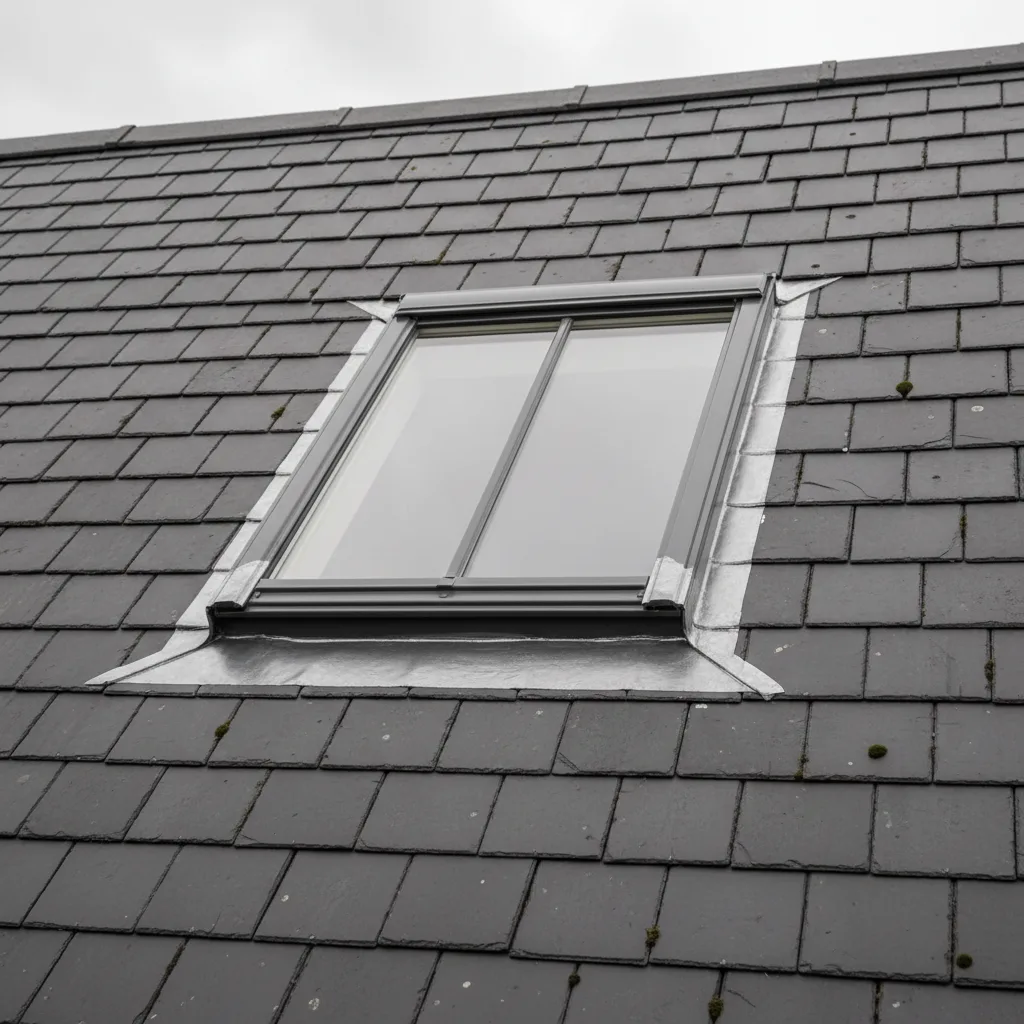
This is not an argument about people. It is an argument about where the money in a rooflight installation sits, and almost none of it is in the glass. It is in the height of the upstand above the finished covering, the fall of the roof around it, the direction and depth of the flashing laps, and where the covering terminates against the frame. Every one of those is invisible the moment the scaffold comes down, and the finished job looks identical whether they were done carefully or quickly, and goes on looking identical for several winters.
That makes them the easiest place to take time out of a job, and it is why a lower figure is sometimes a shorter method rather than a better deal. When it surfaces it does not surface small. Water tracking under a short lap or a low upstand goes into the timber and the insulation before it reaches the ceiling, and by the time there is a stain the work required is taking the installation out and starting again, with the scaffold back up and a room to put right.
So the useful way to read a set of quotations is not to find the lowest and the highest. It is to ask what the cheapest one is not doing that the others are. Sometimes the answer is nothing and it is simply a keener price. Often it is on the list above.
What is not included as standard
These are separate trades or separate decisions, and they belong in your budget rather than in a surprise. Ask about each explicitly, of us and of anybody else.
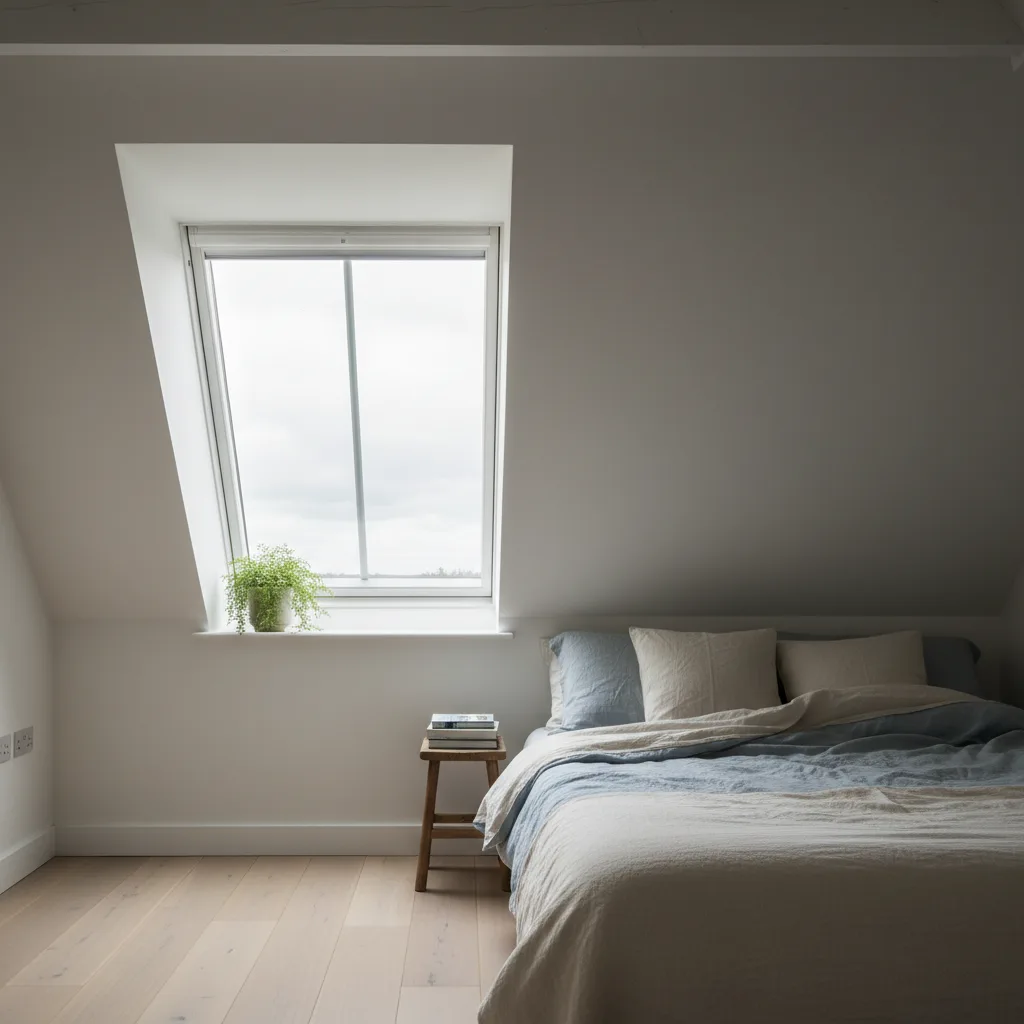
Plastering and decoration of the internal reveal. We form and insulate the reveal properly, because how it is built decides whether it stays free of condensation. The final skim and the paint are usually somebody else’s work, and where they sit outside the price that should be stated rather than assumed.
Blinds. Internal, external or integral to the unit, blinds are a separate specification. On a south-facing slope they are worth deciding alongside the glazing rather than afterwards.
Electrical work for actuated units. Bringing a supply to the roof space, and any switching or control position on a wall, is electrical work with its own sign-off. Where it is included we say so.
Structural design where an opening is enlarged. Cutting into a trussed roof, or forming an opening wide enough to need a designed trimmer, is engineer’s work. We tell you at survey whether your job needs it, and we do not quote around it as though it were optional.
Survey, specification, then a number
The sequence is the whole of our answer on cost, and it does not vary. We look at the roof, inside and out, and write a specification against what is there: the unit, the glazing chosen for that orientation, the opening method, the flashing detail for that covering, the access arrangement, and any structural work. Then we put a figure against that specification in writing, with the items above listed rather than bundled, and Building Control notification and our ten-year workmanship guarantee already in it.
That figure holds. It changes only if you change what you asked for. If something in the roof turns out to be materially different from what the survey established, you hear it from us before any decision is made rather than afterwards on an invoice. Fifteen years of doing one job is what makes that possible: the surprises in Oxfordshire roofs are mostly surprises we have already met.
So if you want to know what a skylight costs in Oxford for your own roof, the next step is a survey rather than a figure over the phone. Tell us the building and the room, and we will tell you what we need to see before we can put a number on it.
Four steps, no surprises
Survey
We look at the roof, the covering and the slope before we say anything about price.
Specification
The right unit and glazing for that roof and that orientation, in plain terms.
Fixed quote
Written, itemised and firm. The number does not move once work starts.
Install
Opening formed, unit set and weathered, covering made good. Notification is ours.
Tell us about your roof
We start with the building, the covering and the slope. Then we tell you what will suit it, and what it will cost, as a fixed written number.
- Surveyed before it is priced
- 10-year workmanship guarantee
- Building Control notification handled
- New installations and replacements