
The choice between a centre-pivot and a top-hung roof window is decided by three measurements and one habit: how high the handle sits above the floor, how much clear space there is in front of the window inside, how much clear space there is above it outside, and whether anybody is realistically going to clean the outer glass. Everything else is preference. Both mechanisms are mature, both are made to the same build quality within a given range, and neither is the better product in the abstract. The short version of the difference is covered on what is the difference between centre-pivot and top-hung. What follows is the longer comparison, room by room, with the numbers that actually settle it.
Where the hinge sits, and what follows from it
A centre-pivot hangs on two pivots set in the side jambs, roughly midway up the sash, so the sash rotates about a horizontal axis through its own middle. Push the top and the head goes out while the foot comes in. A top-hung unit carries its hinges at the head of the frame, and the sash swings outward and upward from there like a hatch, with nothing entering the room.
That single difference in hinge position generates every practical consequence below. It sets where the handle can be, how the sash behaves in wind, whether the glass can be reversed for cleaning, how large the unobstructed aperture is, and whether the unit is any use as an escape opening. It is worth understanding the geometry once, because after that the room tells you the answer.
The rotation arc and the room in front of it
When a centre-pivot opens, the lower half of the sash swings into the room. At a typical 45 degree opening on a 1400mm tall sash, roughly 400mm of glass and frame arrives inside, projecting downward and inward from the pivot line. In a loft where the ceiling slope already brings the roof low, that arc occupies space somebody may be standing in.
Measure it before you order. Stand where you would stand at the window, and check what is at head height between the pivot line and the floor. If the answer is a wardrobe, a bed head or a desk lamp, the centre-pivot will still work, but it will be opened less often than you expect, and a window that is not opened is not ventilating anything.
Clear opening area is not the sash size
A top-hung unit opening 45 degrees gives an aperture almost equal to the full frame opening, because the sash has left the plane of the roof entirely. A centre-pivot at the same angle gives you two apertures, one above the pivot bar and one below it, separated by the sash itself. The total glazed area is identical. The usable clear opening is not.
This matters for two things. First, anywhere a specific clear openable area is required, the geometry decides whether the unit qualifies. Second, for climbing out onto a flat roof or a terrace, the bar across the middle is the whole story. A person can pass through a top-hung opening. A person cannot pass through a centre-pivot in the same size.
| Requirement | Centre-pivot | Top-hung |
|---|---|---|
| Unobstructed aperture when open | Split by the sash | Full frame opening |
| Space needed inside | Sash swings in | None |
| Space needed outside | Minimal | Sash swings out and up |
| Outer glass cleaned from inside | Rotates fully | Only if dual-action |
| Suits a person passing through | No | Yes |
How high the handle sits above the floor
Centre-pivot units almost always carry a bar handle at the head of the sash. Top-hung units carry theirs at the foot, because the foot is what swings away from you. That reverses which one is reachable at a given mounting height.
A window set low in the slope with its head at 1900mm puts a centre-pivot handle within easy reach and a top-hung handle down near the cill, which is fine. Push the same window 600mm further up the slope and the centre-pivot handle is now a stretch, while the top-hung handle has moved up into a comfortable position. On a high window over a stairwell, a top handle can be reached with a pole where a bottom handle cannot. Handle height is the single most common reason a unit is the wrong choice, and it costs nothing to work out in advance.
Cleaning the outer glass from the inside
A centre-pivot rotates through 180 degrees and holds there on a cleaning catch, so the outer surface of the glass presents itself into the room and can be wiped standing at the window. On a second-floor rear slope with no safe ladder position, that is not a convenience feature. It is the difference between glass that stays clear and glass that does not.
A pure top-hung unit cannot do this. Many ranges answer that with a dual-action mechanism, described below, and where a top-hung is genuinely wanted on a high slope, the dual-action version is usually the right order rather than the plain one. Our practical view is set out on how do you clean the outside of a roof window.
Which one suits an escape opening
Where a room requires an escape opening, the clear openable area and its unobstructed shape are what count, and the top-hung geometry is far better suited to producing them. A centre-pivot in the same frame size may present two apertures that individually fall short of what is needed even though the frame is large enough.
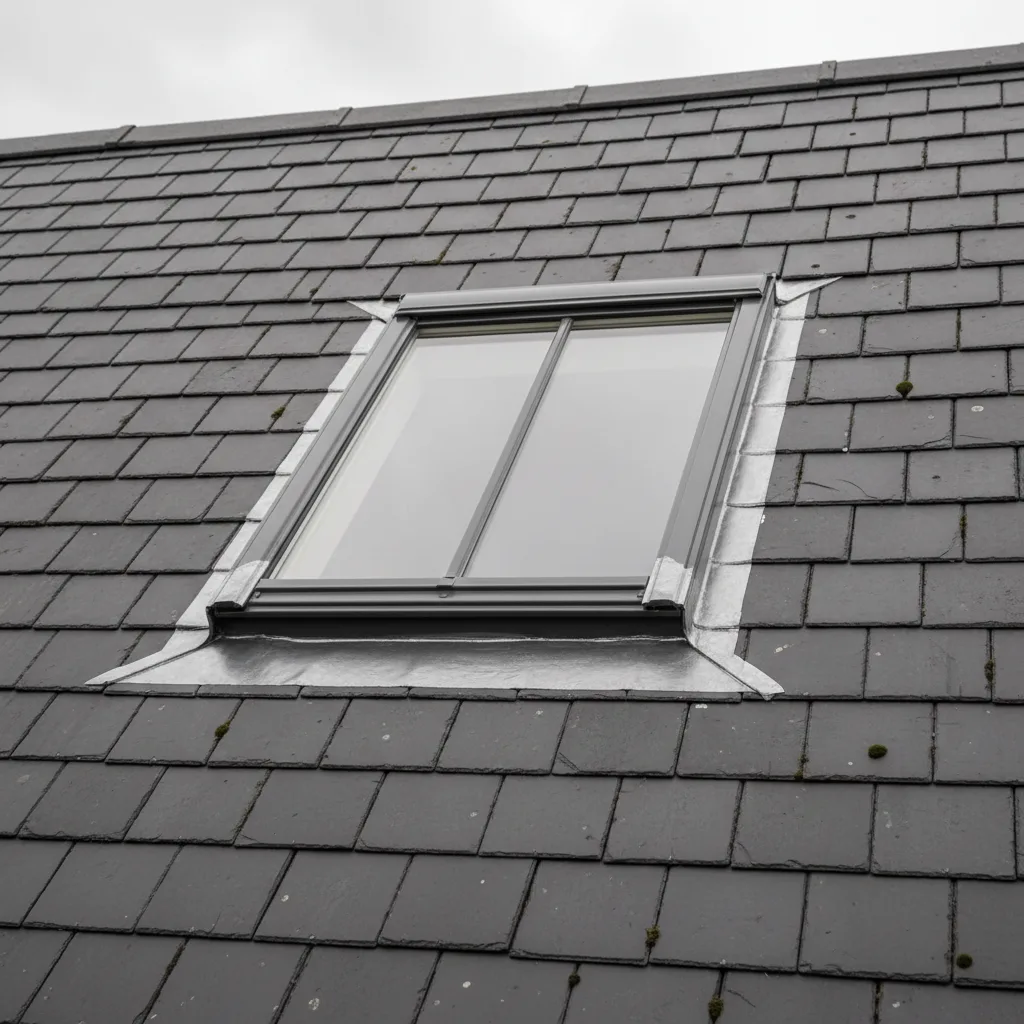
Some manufacturers make a dedicated escape version that swings the sash out much further, sometimes past 60 degrees, precisely so a person can pass. Those are ordered as a distinct product, not adapted on site. The measurements and the rules are set out in full on roof window escape openings and the rules.
Furniture, beds and desks below the window
Rooms get furnished after the window is fitted, and the furniture usually goes exactly where the light falls. A desk under a roof window is the most common arrangement in a converted loft, and it is the arrangement that suffers most from a sash swinging inward.
A top-hung unit leaves the whole area below the cill free, which is why it is generally the better choice over a desk, a bed head, a bath or a fitted worktop. A centre-pivot suits a wall where the floor below stays clear, or a high position where the arc passes well above anything.
Headroom on a shallow pitch
Pitch changes the arithmetic. On a steep 50 degree roof, a centre-pivot sash swinging in stays close to the slope and takes little useful room. On a shallow 20 degree roof, the same sash comes much further into the space and hangs lower over the floor, because the plane it is rotating out of is nearly horizontal.
The same shallow pitch makes a top-hung sash stand up like a lid, which is fine outside but heavier to push and more exposed. Neither is disqualified by pitch, but the discomfort of a centre-pivot on a shallow roof is real and is easy to miss on a drawing.
Wind, and what happens when it is open
A top-hung sash presents its full face to the wind as a raised panel. Good units resist this with strong stays and multiple hold positions, but on an exposed slope a gust can slam a top-hung sash shut or strain it open. A centre-pivot is balanced about its axis, so wind pressure is partly cancelled across the pivot line, and it tends to sit more calmly.
On an exposed Oxfordshire ridge or an unsheltered rear slope with a long fetch across fields, that behaviour is worth weighing. It is one of the few places where the centre-pivot has a clear mechanical advantage beyond cleaning.
Electric operation and rain sensors
Both types are made in electric versions, with a chain or spindle actuator, a wall switch or remote, and a rain sensor that closes the sash when the first drops land on it. The actuator sits differently on each: at the head for a centre-pivot, at the cill for a top-hung, which changes what is visible from inside.
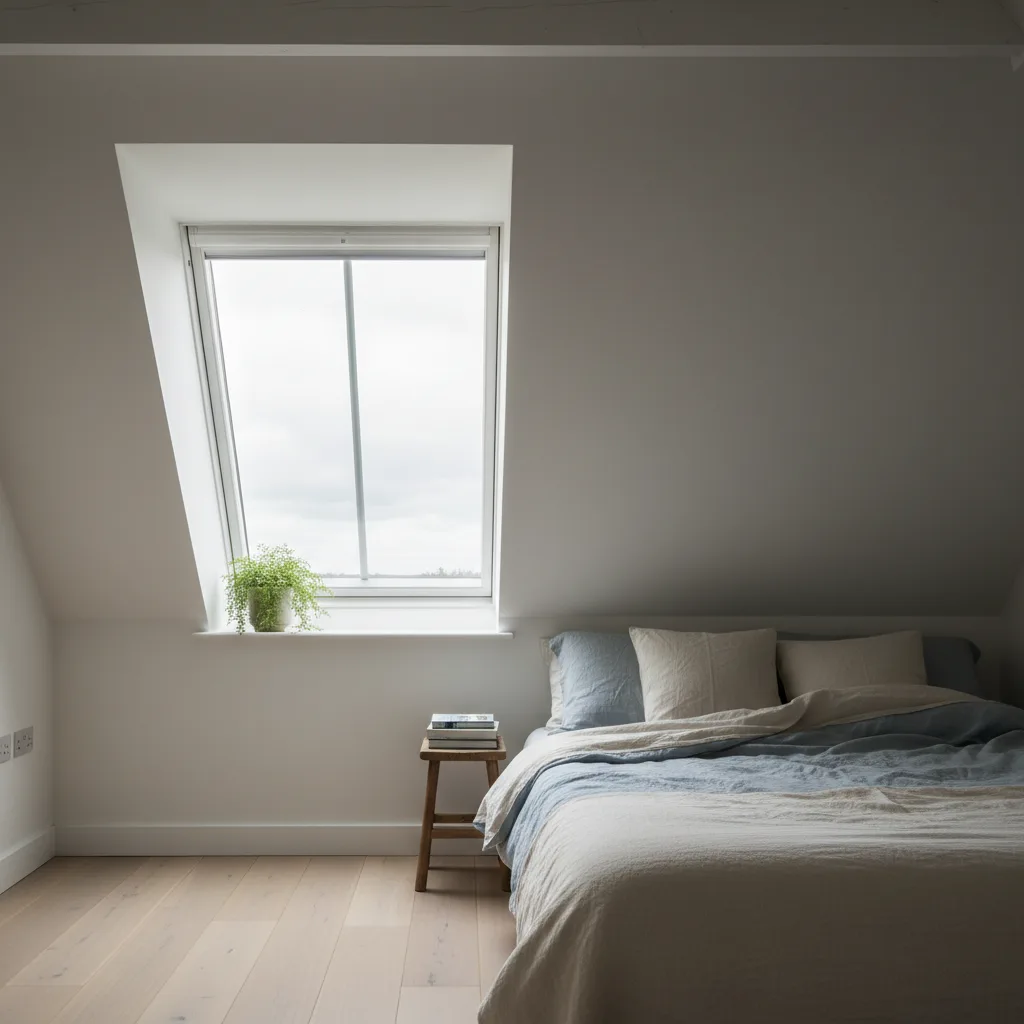
The decision that matters is not which mechanism but when you decide. A mains cable has to reach the head of the frame, and that route wants planning before the plasterboard goes up. Solar-powered versions exist and remove the cable entirely, at the cost of a battery and a small collector on the outside of the frame.
Blinds, awnings and shading on each type
Internal blinds fit the sash and travel with it on both types, held in side channels so the fabric stays flat at any opening angle. That works identically on centre-pivot and top-hung units and is rarely a deciding factor.
External awning blinds are different. They mount above the sash and drop down the outside face, and on a top-hung unit the awning has to accommodate the sash lifting out into it. Manufacturers solve this within a range, but mixing an old sash with a new external blind is where the incompatibilities show up. The wider decision is covered on roof window blinds and when to specify them.
The view, standing and sitting
Closed, both types give the same view, because both are the same glass in the same hole. Open, they differ. A top-hung sash lifts clear and leaves an uninterrupted view of the ground and the horizon, which is why it suits a window somebody stands at and leans on.
A centre-pivot open at 45 degrees puts the sash across the middle of the view, and the lower aperture points at the sky rather than the ground because it is looking up past the sash. If the reason for the window is a view of the garden or the spires, that is a material difference.
Dual-action and hybrid mechanisms
Several ranges offer a sash that top-hangs for use and pivots for cleaning, switching between the two with a lever or by pushing past a detent. These solve the honest conflict between a clear aperture and a cleanable outer face, and where budget allows they are the sensible answer on an upper storey.
The trade-offs are weight, cost and a slightly deeper frame section. There is also more to understand, and in a rented property or a room used by children the simpler mechanism sometimes wins on those grounds alone. Handle and catch behaviour on each is covered on roof window handles, catches and child safety.
Swapping one type for the other
An existing centre-pivot can generally be replaced with a top-hung unit of the same size code without altering the structural opening, because the frame footprint and the flashing interface are common across the range. What changes is the handle position, the internal lining reveal at the cill, and sometimes the blind.
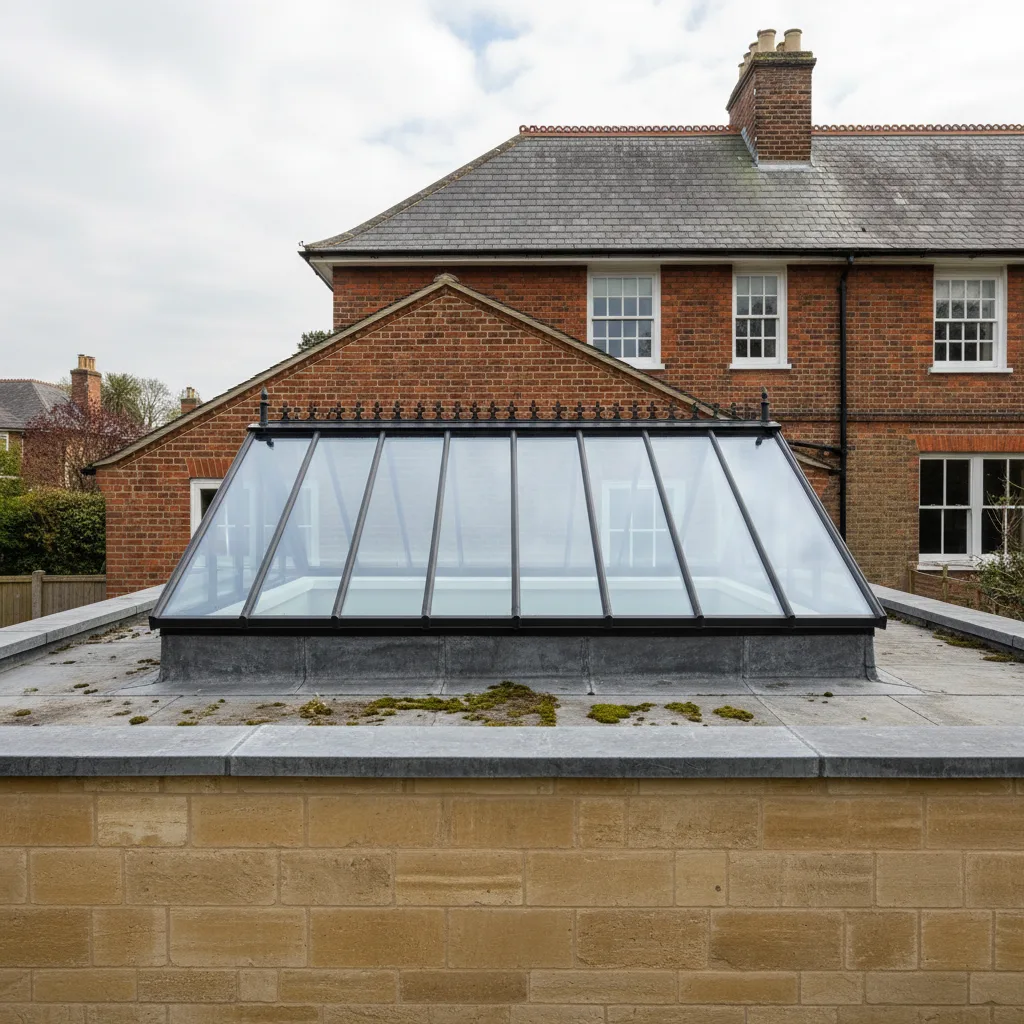
Going the other way is equally straightforward, and it is a common request when a room has been refurnished and the inward swing has become a nuisance. Bringing a new mechanism into an old frame is not a job. The frame goes too. That work is set out on replacing an old roof window with a modern unit.
How we specify it, room by room
We ask four questions at survey and let them decide. What is the finished floor to the underside of the proposed cill? What will stand under the window when the room is finished? Can the outer glass be reached safely from outside, from a ladder or a scaffold, once a year? And does this opening have to serve as an escape route?
A high window over a stair with nothing beneath it and no escape duty is a centre-pivot. A low window over a desk in a bedroom that needs an escape opening is a top-hung. A high window in a bathroom on a rear slope with no safe external access is a dual-action. There is no house policy, because the room decides, and we would rather argue for the awkward answer at survey than fit the easy one and hear about it later. We install VELUX, Fakro, Keylite and Roto units in both mechanisms and specify from the room outward.
Four steps, no surprises
Survey
We look at the roof, the covering and the slope before we say anything about price.
Specification
The right unit and glazing for that roof and that orientation, in plain terms.
Fixed quote
Written, itemised and firm. The number does not move once work starts.
Install
Opening formed, unit set and weathered, covering made good. Notification is ours.
Helpful reading on this
Costs, comparisons and the questions we are asked most.
Tell us about your roof
We start with the building, the covering and the slope. Then we tell you what will suit it, and what it will cost, as a fixed written number.
- Surveyed before it is priced
- 10-year workmanship guarantee
- Building Control notification handled
- New installations and replacements