
Most domestic roof lanterns are built somewhere between 20 and 30 degrees, and 25 degrees is the figure that suits the largest number of houses. Below 15 degrees the glass stays dirty and the object loses its character. Above 35 degrees the lantern gets tall enough to start causing planning and neighbour questions. This page explains what sets the pitch, what each degree buys you and costs you, and how to arrive at a number for your own roof.
Pitch is a consequence of two dimensions, not a free choice
A lantern’s pitch is not usually specified directly. It falls out of the span across the short axis and the ridge height above the kerb, and manufacturers set it by choosing one and calculating the other.
The geometry is simple. On a lantern with equal facets both sides, the rise from the kerb top to the underside of the ridge is half the short span multiplied by the tangent of the pitch angle. A 1500mm wide lantern at 25 degrees rises 350mm. The same lantern at 35 degrees rises 525mm.
That means pitch and width are locked together. A wide lantern at a steep pitch becomes a tall object very quickly, which is why large lanterns are usually shallower than small ones and why a small lantern can carry a steep pitch without looking odd.
| Short span | Rise at 15° | Rise at 20° | Rise at 25° | Rise at 30° | Rise at 35° |
|---|---|---|---|---|---|
| 1000mm | 134mm | 182mm | 233mm | 289mm | 350mm |
| 1500mm | 201mm | 273mm | 350mm | 433mm | 525mm |
| 2000mm | 268mm | 364mm | 466mm | 577mm | 700mm |
| 2500mm | 335mm | 455mm | 583mm | 722mm | 875mm |
| 3000mm | 402mm | 546mm | 699mm | 866mm | 1050mm |
The minimum a manufacturer will stand behind
Almost every lantern manufacturer sets a minimum pitch in their technical documentation, and it is normally 5 degrees, sometimes 10. Below that figure the glazing gaskets and the drainage channels within the bars are not warranted to shed water.
The reason is that the bars carry internal drainage. Any water that gets past the outer gasket, and a little always does under wind driven rain, runs down a channel inside the rafter bar to a weep at the eaves. That channel needs a fall to work.
Meeting the manufacturer’s minimum is the floor, not the target. A lantern at 7 degrees complies with the paperwork and will still perform poorly in every other respect described below.
Why shallow glass stays dirty
This is the most common regret on a shallow lantern and it starts within a year.
Rain running down glass at 25 degrees moves fast enough to carry dust and pollen with it. At 10 degrees it creeps, and it evaporates before it reaches the bottom, leaving the dirt behind as a tidemark. The glass gets progressively hazier and no rainfall clears it.
The effect compounds. A dirty surface holds water longer, which grows algae in the north facing corners, which holds more dirt. A shallow lantern in a garden with mature trees can look green within two seasons.
Self cleaning coatings depend on water sheeting off the glass to carry away the dirt they have loosened, so they work considerably better on a pitched facet than a shallow one. That is one of the practical arguments for pitch that never appears in a brochure.
The dirt line at the bottom of every pane
Look at any lantern and you will see a darker band at the foot of each facet, where the glass meets the eaves bar. That is where the run-off is thickest and slowest.
Steeper glass narrows that band because water leaves faster and the transition at the bar is more abrupt. Shallow glass widens it, and on a very shallow facet the band can be 100mm deep and visible from inside as a shadow at the edge of the sky.
It is cosmetic rather than technical, and it is the sort of thing people do not notice until it is theirs.
Snow, and the load case that arrives once a decade
Snow sitting on glass is a structural load and a light blocker. It slides off a lantern once the pitch and the surface friction allow it, and glass is a very low friction surface once the layer against it starts to melt.
The practical threshold is around 20 degrees. Above that, snow on a lantern generally clears itself within a day or two of falling. Below 15 degrees it sits until it thaws, which in a cold spell means a week of a dark room and a loaded structure.
Where it goes is worth thinking about. Snow shedding off a steep lantern lands on the flat roof beside it and drifts against the kerb, which is a load the structural design should already account for. It is covered further on structural openings and steel for a roof lantern.
Overall height: the sum people forget
The height that matters is not the rise of the glass. It is everything stacked together, measured from the finished flat roof surface.

Take a 2000mm wide lantern at 25 degrees. The kerb is 150mm above the finished roof surface as a minimum. The lantern base frame sits on that, perhaps 60mm. The glass rises 466mm. The ridge capping adds another 40mm or so.
That is roughly 720mm of object standing on your flat roof. At 35 degrees the same lantern reaches about 950mm. Neither figure is a problem in itself, but both are considerably more than the picture in most people’s heads, and both are measured against a permitted development height limit or a neighbour’s window sill.
Hipped ends, and the second pitch nobody mentions
A rectangular lantern is normally hipped: the two long facets are joined at the ends by triangular facets running up to the ridge on hip bars.
Here is the geometry that surprises people. If the end facets rise to the same ridge height over a shorter horizontal run, they are steeper than the main facets. On a lantern much longer than it is wide, the hipped ends can be considerably steeper than the sides, and from the garden that reads as a slightly awkward shape.
Manufacturers handle this either by keeping the ridge short and letting the hips be steep, or by extending the ridge closer to the ends and giving the hips a gentler run. Ask for the elevation drawing rather than a plan, because a plan tells you nothing about this.
A gabled lantern, with vertical glazed triangles at the ends instead of hips, avoids the problem entirely and gives more headroom at the ends. It is a more assertive object and suits fewer houses.
How pitch reads from the garden
A shallow lantern reads as a low glazed box and belongs on a modern building with a flat parapet and clean lines. A steep one reads as a small pitched roof, echoing the main roof of the house, and belongs on a Victorian or Edwardian property.
On a rear addition behind an Oxford terrace, where the main roof is at 40 degrees or more, a lantern at 30 to 35 degrees sits comfortably in the same visual family. The same house with a 12 degree lantern gets an object that looks like it was chosen from a different catalogue, because it was.
The other consideration is the view from upstairs. You will look down on this from a bedroom window, every day, and a steeper lantern presents more of its glass to that view and less of its frame.
How pitch reads from inside the room
From directly beneath, pitch is barely perceptible. From across the room it is the whole character of the object.
A steep lantern draws the eye up and gives the ceiling a sense of volume. The facets are visible as facets, the ridge reads as a line, and the room feels taller than its ceiling height.
A shallow lantern reads almost as a flat aperture with a slight crown. That is a legitimate look, quieter and more contemporary, and if what you want is a plain view of sky then a flat rooflight does it better and cheaper. That comparison is made on are roof lanterns or flat rooflights better.
Pitch and the light that comes through it
Glass transmits light best when the light strikes it square on and reflects more of it away as the angle becomes glancing. Below roughly 60 degrees of incidence the loss is small. Beyond that it climbs quickly.

In practice this means a shallow lantern favours the high summer sun and a steeper one does better with low winter light, because a steeper facet presents a less glancing angle to a sun sitting 15 degrees above the horizon in December.
A steeper lantern also collects light from a wider slice of the sky dome across the whole day, including the bright horizon band near sunrise and sunset. The effect is modest but it runs in the right direction: more useful light in winter, marginally less at midday in June, which is exactly the trade a British house wants.
Pitch and solar gain
The same geometry that helps in winter helps in summer, for the opposite reason.
The midsummer sun in Oxford peaks at about 62 degrees above the horizon. A lantern facet at 10 degrees pitch presents itself almost square on to that, taking the full intensity. A facet at 30 degrees is angled away from it, and the south facing side takes rather less.
The north facing facet of a steep lantern gets almost no direct sun at all through the summer, which is a useful thing to know when deciding which way a lantern’s ridge should run. Running the ridge east to west gives you one facet that is always in shade.
None of this replaces solar control glazing and a ridge vent, which are covered on roof lantern glazing and solar control. It does mean a steeper lantern starts the summer with a small advantage.
Rain noise and the angle it strikes at
Rain falling on glass at a glancing angle deposits less energy into the pane than rain hitting it square. A steeper facet therefore sounds slightly quieter under vertical rainfall than a shallow one.
The effect is real but it is second order. Far more of the sound comes from the glass make-up, and a laminated inner pane with an acoustic interlayer does more for noise than ten degrees of pitch.
Where pitch does matter for noise is in wind driven rain, which arrives at an angle and strikes the windward facet more squarely on a shallow lantern than a steep one.
Neighbours, planning and the height limits that bite
A lantern on a single storey rear extension under permitted development has to sit within the overall height allowance for that extension, and a tall lantern is part of that height rather than an addition to it.
The other constraint is overlooking, which cuts both ways. A tall lantern raises the possibility that a neighbour’s upper window looks down into a brightly lit room, and it also becomes a visible object from their garden.
In a conservation area, and there are many in and around Oxford, the visibility of the lantern from a public place can determine what is acceptable. A steeper lantern that matches the roof pitch of the house is often received better than a shallow modern one, which runs against the usual assumption that lower is safer. The consent position is set out on do roof lanterns need planning permission.
Pitch when you are replacing an existing lantern
Replacing a lantern on an existing kerb gives you a fixed footprint and, usually, a free choice of pitch above it.
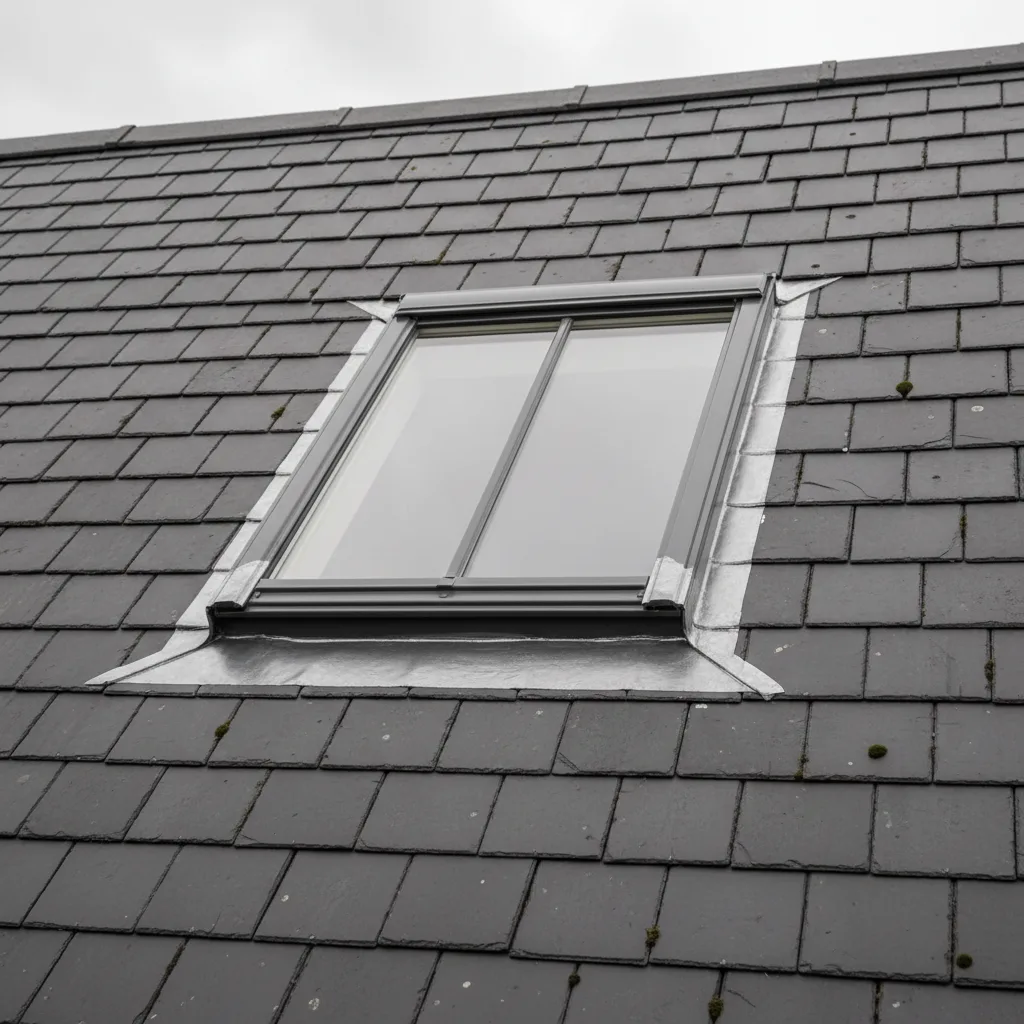
That is an opportunity. Older lanterns, particularly uPVC ones from the 1990s and 2000s, were often built shallow, and the owner has lived with dirty glass ever since. A replacement at a steeper pitch on the same kerb changes that without touching the roof structure.
Two checks before you assume it. The kerb has to be square and level, because a new lantern will show up a kerb that is 15mm out far more than the old one did. And the extra height has to still sit within whatever height constraint applied to the extension.
Common pitches and what they suit
| Pitch | Character | Suits | Watch for |
|---|---|---|---|
| 5 to 12° | Almost flat, minimal object | Modern flat roofed builds, parapet walls | Dirt retention, snow sitting, weak self cleaning |
| 15 to 20° | Low pitched, discreet | Wide lanterns where height is limited | Marginal snow shedding, visible dirt line |
| 20 to 27° | The general purpose answer | Most domestic rear extensions | Little. This is the range to default to |
| 28 to 35° | Traditional, echoes a house roof | Period properties, smaller lanterns | Overall height, hipped end geometry |
| Above 35° | Conservatory roof in character | Narrow lanterns, orangery style roofs | Height limits, neighbour views, cost |
Arriving at the number for your roof
Work in this order. Establish the maximum overall height you can accept, from the neighbour’s outlook, any planning constraint, and how it looks from your own upstairs window. Take the short span of the lantern you want. Subtract the kerb, base frame and ridge capping from the height allowance, and read the pitch back off the rise.
If that arithmetic gives you 22 degrees, take it. If it gives you 11, the lantern is too wide for the height you have, and the honest options are a narrower lantern, a taller allowance, or flat glazing instead. Forcing a wide lantern to a shallow pitch to make it fit is the decision people regret.
Send us the extension dimensions and a note of what sits above and beside the roof and we will give a range by email with a pitch and an overall height in it. The fixed price follows a survey, when the kerb height and the finished roof level are measured rather than assumed.
Four steps, no surprises
Survey
We look at the roof, the covering and the slope before we say anything about price.
Specification
The right unit and glazing for that roof and that orientation, in plain terms.
Fixed quote
Written, itemised and firm. The number does not move once work starts.
Install
Opening formed, unit set and weathered, covering made good. Notification is ours.
Helpful reading on this
Costs, comparisons and the questions we are asked most.
Tell us about your roof
We start with the building, the covering and the slope. Then we tell you what will suit it, and what it will cost, as a fixed written number.
- Surveyed before it is priced
- 10-year workmanship guarantee
- Building Control notification handled
- New installations and replacements