
Twenty-five miles of road out of Oxford crosses four county boundaries and lands in the territory of a good number of separate planning authorities. The legislation they apply is identical. The local policy they apply it against is not, and neither is the pattern of Article 4 directions, the wording of conservation area appraisals, or the list of documents they will accept an application without. This page is a working reference to who decides what across the area we cover, and to the differences that actually change an answer about a rooflight.
One national Order, several separate decision makers
Permitted development for rooflights comes from the Town and Country Planning (General Permitted Development) (England) Order 2015, Schedule 2, Part 1, Class C. It is national law. The 150mm projection limit and the ridge limit are the same in Banbury as they are in Wantage, and no council can vary them.
What each authority controls is everything sitting on top of that. Whether a direction has been made removing Class C at your address. What the adopted local plan says about heritage assets and about the character of designated areas. How the conservation officer reads a particular roofscape. Those are local decisions and they are genuinely different from one authority to the next.
So the useful mental model is a fixed national floor with a locally written layer above it. People go wrong by assuming the whole thing is national, or by assuming the whole thing is local. Both halves are true of different parts of the question.
The address decides, and the postal town frequently misleads
An Oxford postal address does not mean Oxford City Council. The city’s administrative boundary is tighter than the built-up area and tighter still than the postal district.
Botley, Cumnor and Kennington carry Oxford addresses and sit in the Vale of White Horse. Yarnton, Begbroke and Kidlington carry Oxford postcodes and sit in Cherwell. Sandford-on-Thames and Wheatley are South Oxfordshire. Headington, Marston, Cowley and Wolvercote are inside the city.
It goes further out too. OX17 postcodes north of Banbury cover villages such as Middleton Cheney that sit in Northamptonshire, not Oxfordshire. Getting this wrong is not a trivial error, because it sends you to the wrong local plan, the wrong appraisal document and the wrong list of directions.
The five authorities inside Oxfordshire
Oxfordshire remains two-tier: district councils are the local planning authorities for householder work, and the county council is not.
| Authority | Places in our radius | Roofscape character |
|---|---|---|
| Oxford City Council | The city within its boundary | Welsh and Stonesfield slate, plain clay tile, dense terraces, extensive conservation area coverage |
| Cherwell District Council | Banbury, Bicester, Kidlington, Deddington, Adderbury | Ironstone and brick, plain tile and slate, market town cores |
| West Oxfordshire District Council | Witney, Woodstock, Carterton, Charlbury, Burford, Chipping Norton | Cotswold limestone with stone slate and handmade clay, much of it inside a national landscape |
| South Oxfordshire District Council | Didcot, Thame, Wallingford, Chinnor, Watlington | Brick and flint, clay tile, Chilterns scarp villages |
| Vale of White Horse District Council | Abingdon, Wantage, Faringdon, Botley, Kennington | Limestone and brick, clay tile, downland villages |
Buckinghamshire, and the reorganisation that caught up with the guidance
Buckinghamshire Council became a single unitary authority in 2020, absorbing the four district councils that previously decided applications there. One council now determines everything from Buckingham down to the county’s southern edge.
The catch is that one authority does not yet mean one policy. Until a single plan covering the whole county is adopted, the legacy district plans continue to apply in their own areas, so a property near Buckingham is assessed against different adopted policy from one near Princes Risborough while both are decided by the same council.
The practical consequence for anybody researching a rooflight is that older online guidance still refers to district councils that no longer exist, and that a search for the former district’s planning department leads to material that may or may not have been carried forward.
West Northamptonshire and the Brackley corner
The north eastern reach of our radius crosses into Northamptonshire around Brackley and the villages between it and Banbury. Planning there is decided by West Northamptonshire Council, a unitary authority formed in 2021 from the former district and borough councils in that part of the county.
The same transitional position applies. Legacy local plan documents from the predecessor authority remain part of the development plan alongside the joint strategic policies, and both are read together.
Brackley itself has a substantial conservation area covering the historic core along the High Street, with a stone and slate roofscape that is read collectively rather than plot by plot. It is materially closer to Bicester than to Northampton, and the temptation to reason from Oxfordshire practice is strong and unreliable.
The Berkshire and Warwickshire fringes
South of the Vale, the radius reaches the northern parishes of West Berkshire, a unitary authority covering downland villages along the ridge above the Thames. Much of that ground sits inside the North Wessex Downs National Landscape, which raises the weight given to visual impact without altering who decides.
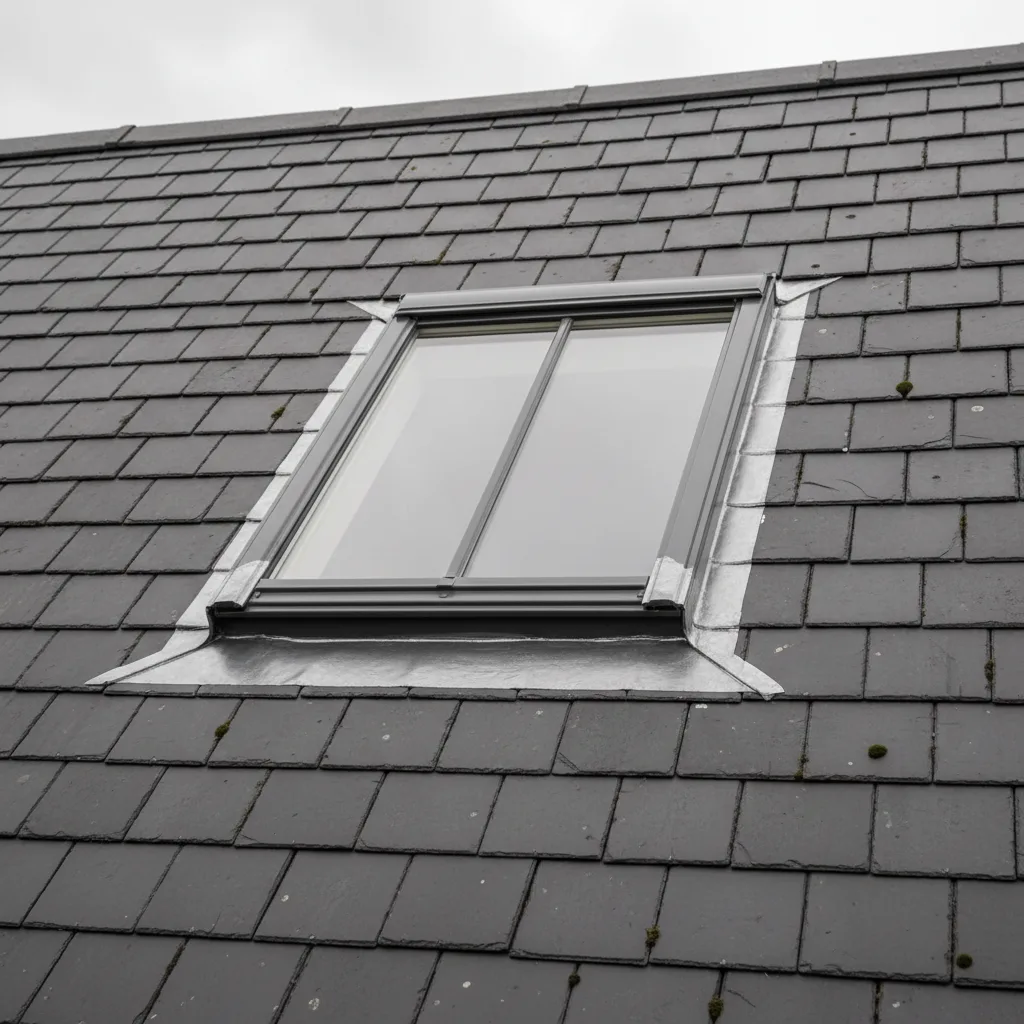
North west, past Chipping Norton, the radius brushes the southern edge of Stratford-on-Avon district in Warwickshire, which is two-tier like Oxfordshire and where the district council is the planning authority. The building stock there is continuous with the Cotswolds and the roofscape reads the same way, but the plan policies and the appraisals are Warwickshire’s.
These fringes account for a small share of the work and a disproportionate share of the confusion, because they are the addresses where people most often assume Oxfordshire rules apply.
Oxfordshire County Council does not decide your rooflight
Worth stating plainly, because the county council appears in searches and takes telephone calls from people asking about house alterations.
In a two-tier area the county council is the planning authority for minerals and waste, and for its own development such as schools and highways. Householder applications, listed building consent and certificates of lawfulness are all district or city matters.
The county council does hold the historic environment record, which is a genuinely useful source on archaeology and on the history of a site, and it is the highway authority, which occasionally matters for access during an installation on a narrow street. Neither role gives it a say in whether you get a rooflight.
Shared officer teams, separate policies and separate decisions
South Oxfordshire and the Vale of White Horse run their planning function through a shared officer team. That produces one set of contact details, one portal experience and, often, the same case officer working on both areas.
It does not merge the councils. Each has its own adopted local plan, its own conservation area appraisals, its own planning committee and its own directions. A decision or a piece of guidance from one is not authority for anything in the other, and officers are careful about that even where the practice happens to be consistent.
The same caution applies to any arrangement between authorities you come across. Shared administration is not shared policy, and it is policy that decides applications.
What is genuinely identical everywhere
A short list, and it is worth knowing so you stop shopping for a better answer on these points.
Permitted development rights and the Class C limits. The eight week statutory determination period for a householder application. The application fee, which is set by national regulations rather than by the council, so it does not vary between authorities for the same kind of application. The listed building consent regime and the tests applied under it. The appeal routes and their deadlines. The requirement to notify Building Control, which is a separate matter covered on our page about Building Regulations for rooflights.
Everything on that list travels with you across every boundary in the radius. Nothing else does.
What actually varies, in the order it will affect you
Directions first. Whether Class C has been removed at your address is the single biggest local variable and it is covered below.

Then adopted policy: how the local plan words its heritage and design policies, and what weight it gives to the character of designated areas. Then supplementary guidance, where some authorities publish detailed design advice on roof alterations and others publish none. Then validation requirements, which are local lists of what an application must contain, and which differ on whether a heritage statement is required for a modest proposal, on drawing scales, and on how many photographs.
Then charges for pre-application advice, which are set locally and differ substantially, unlike the application fee. Our page on pre-application advice goes into when that service earns its cost.
Article 4 directions are the widest variation of all
A direction removes a permitted development right across a defined area, and where one covers roof alterations you need planning permission for a rooflight that would otherwise have needed nothing.
Authorities have used them very differently. Some have made directions over whole conservation areas. Some have targeted particular streets where the cumulative loss of roofscape was documented in an appraisal. Some have made none affecting roofs at all. Two adjoining authorities can take entirely opposite approaches without either being wrong, because the power is discretionary and the evidence base is local.
The wording matters as much as the existence. A direction removing Class A extensions does nothing to a rooflight. One removing the whole of Part 1 removes Class C with it. Our page on Article 4 directions works through how to read one, and the point to take from this page is that the answer has to be obtained from the authority covering your address and cannot be inferred from a neighbouring one.
Conservation area appraisals are the local rulebook
Most designated areas have a published appraisal describing what the designation is protecting, and these are the most useful documents almost nobody reads.
They are written locally, they vary enormously in length and quality, and they frequently say something specific about roofs: that the unbroken slate roofscape seen from a particular viewpoint is a defining characteristic, or that later rooflights have already eroded the uniformity of a terrace. An officer assessing your application will quote from it, and a heritage statement that quotes from it first is in a much stronger position.
Find the appraisal for your specific area, not for the authority generally. A single council may have twenty of them saying different things about different places.
Parish and town councils are consulted, and do not decide
Every application in a parished area is notified to the parish or town council, which may comment within a set period. In Oxford city there are no parish councils across most of the built-up area, and residents’ associations perform a similar informal role.
A parish objection is a material consideration and it is read. It is not a veto, and a case officer will weigh it against policy like any other representation. Where a parish supports a proposal, that is worth having and worth mentioning.
Where a parish objection is likely, the productive step is to speak to them before submission rather than after. They meet monthly, which means an application landing at the wrong point in the cycle can lose weeks to a meeting date.
National landscapes raise the bar without changing the decider
Substantial parts of the radius sit inside the Cotswolds, the Chilterns or the North Wessex Downs national landscapes, formerly known as areas of outstanding natural beauty.
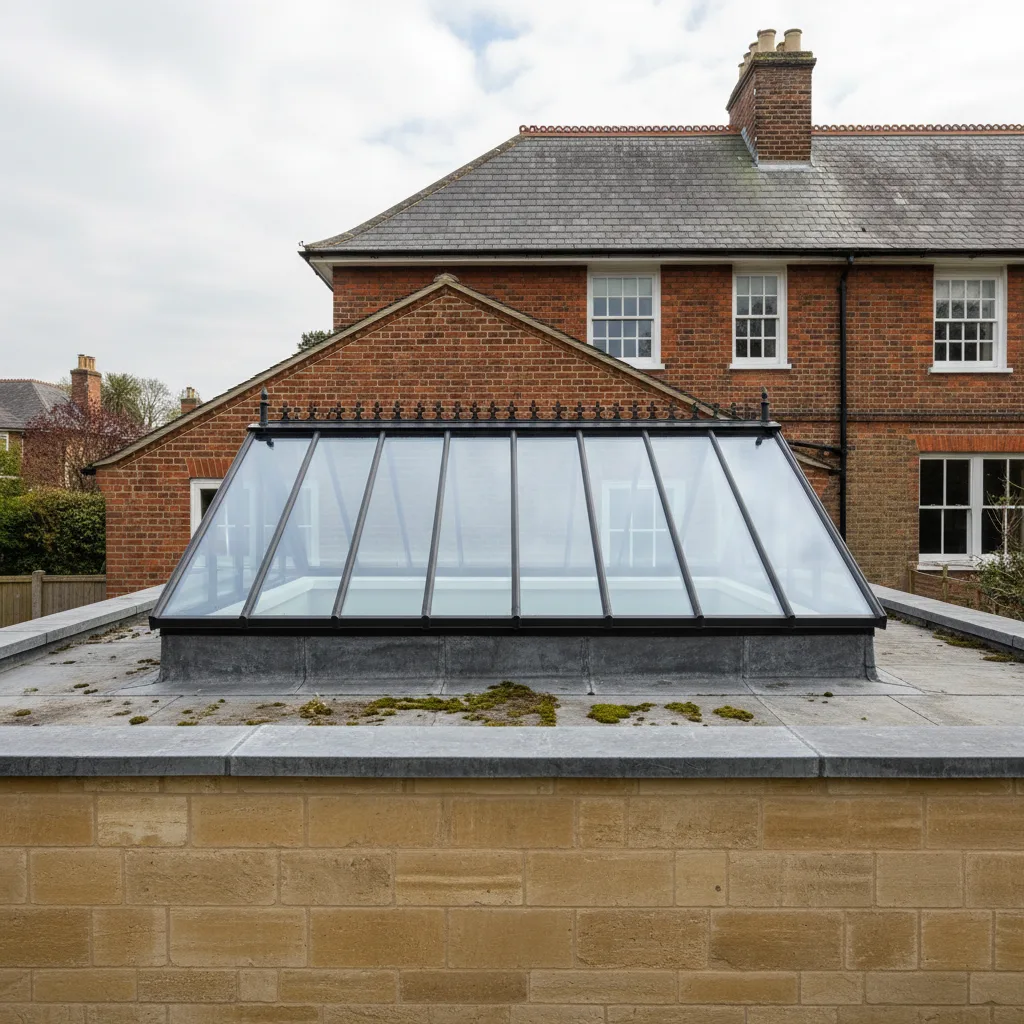
These are not separate planning authorities. Unlike a national park, a national landscape does not have its own planning function, so the district or unitary council still decides your application and the relevant boards act as consultees and policy influences rather than as decision makers.
What the designation does is raise the weight given to landscape and visual impact where an application is required. It does not, by itself, remove Class C rights for a rooflight, which surprises people who expect it to be the strictest constraint on the list.
How we work across the boundaries
Heritage Skylights covers Oxford and 25 miles by road, so we are in several of these authorities in a single week. We do not submit applications and we do not act as anybody’s planning agent, and we are deliberate about not offering an opinion that only the authority can properly give.
What we do at survey is establish the facts that any of them will ask about: the roof structure and covering, whether the covering is original or a later re-covering, the sightlines the slope is actually read from, the unit specified with its projection above the plane of the slope in millimetres, and the perimeter detail. That material reads the same in Banbury as it does in Wallingford, which is the point of gathering it properly.
Before any of that, we ask which authority covers the address rather than which town the post goes to. It takes one enquiry and it decides which set of local documents the whole job is going to be assessed against.
Four steps, no surprises
Survey
We look at the roof, the covering and the slope before we say anything about price.
Specification
The right unit and glazing for that roof and that orientation, in plain terms.
Fixed quote
Written, itemised and firm. The number does not move once work starts.
Install
Opening formed, unit set and weathered, covering made good. Notification is ours.
Helpful reading on this
Costs, comparisons and the questions we are asked most.
Tell us about your roof
We start with the building, the covering and the slope. Then we tell you what will suit it, and what it will cost, as a fixed written number.
- Surveyed before it is priced
- 10-year workmanship guarantee
- Building Control notification handled
- New installations and replacements